Case Studies/CHELSEA FC

Chelsea FC

Validating the digital strategy for a Premier League giant.

Enhancing the digital experience for a global fanbase — testing the hypothesis that international fans would pay for exclusive content through direct fan engagement.

Timeframe

4 months

Location

Remote

Engagement

Agency Contract

Role

UX Researcher / UX Consultant
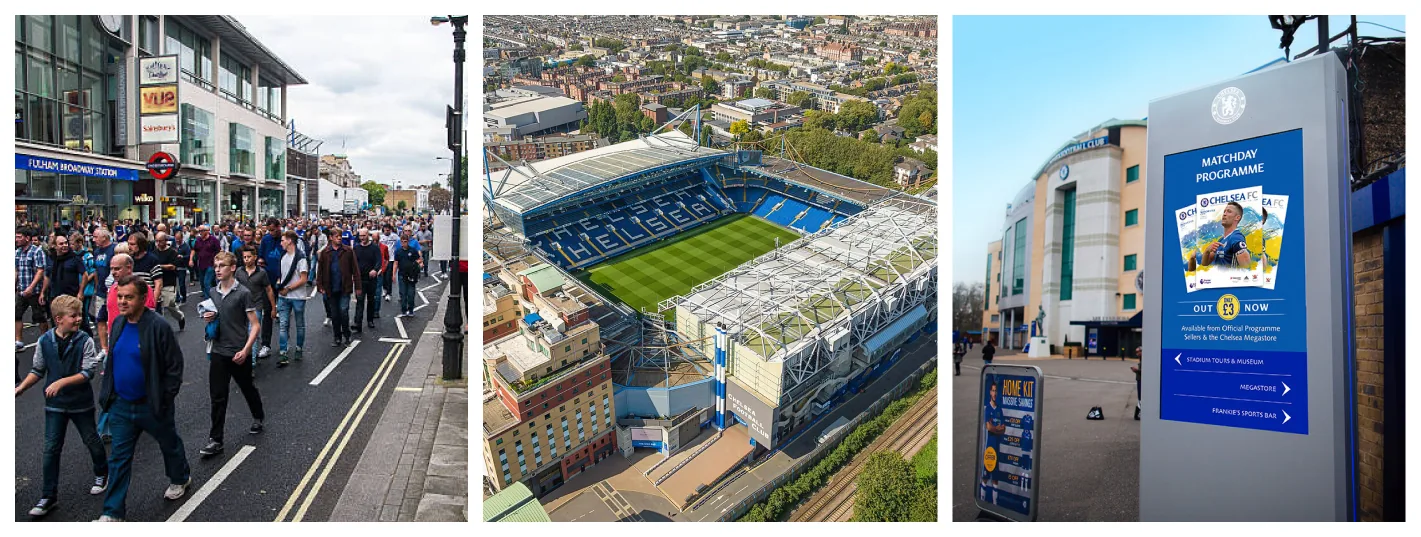
Chelsea FC supporters at Fulham Broadway, Stamford Bridge stadium and a matchday programme kiosk

Introduction

The Client

Chelsea Football Club, founded in 1905 and based in Fulham, London, is a football club known for its success across competitions. The club is dedicated to competitive excellence, youth development, and engaging its international supporters — with a digital reach of over 110 million audiences globally.

Through the agency UXSS, I was brought onto the project to assist in design discovery and research efforts to enhance the digital experience for Chelsea FC's global fanbase. My role included collaborating with internal teams to identify pain points and goals, developing discussion guides for fan and stakeholder interviews, and assisting in fan experience workshops. My key contributions were conducting a competitor analysis on video engagement platforms, creating a structured site map to improve content navigation, and performing a content audit to align existing content with fan expectations.

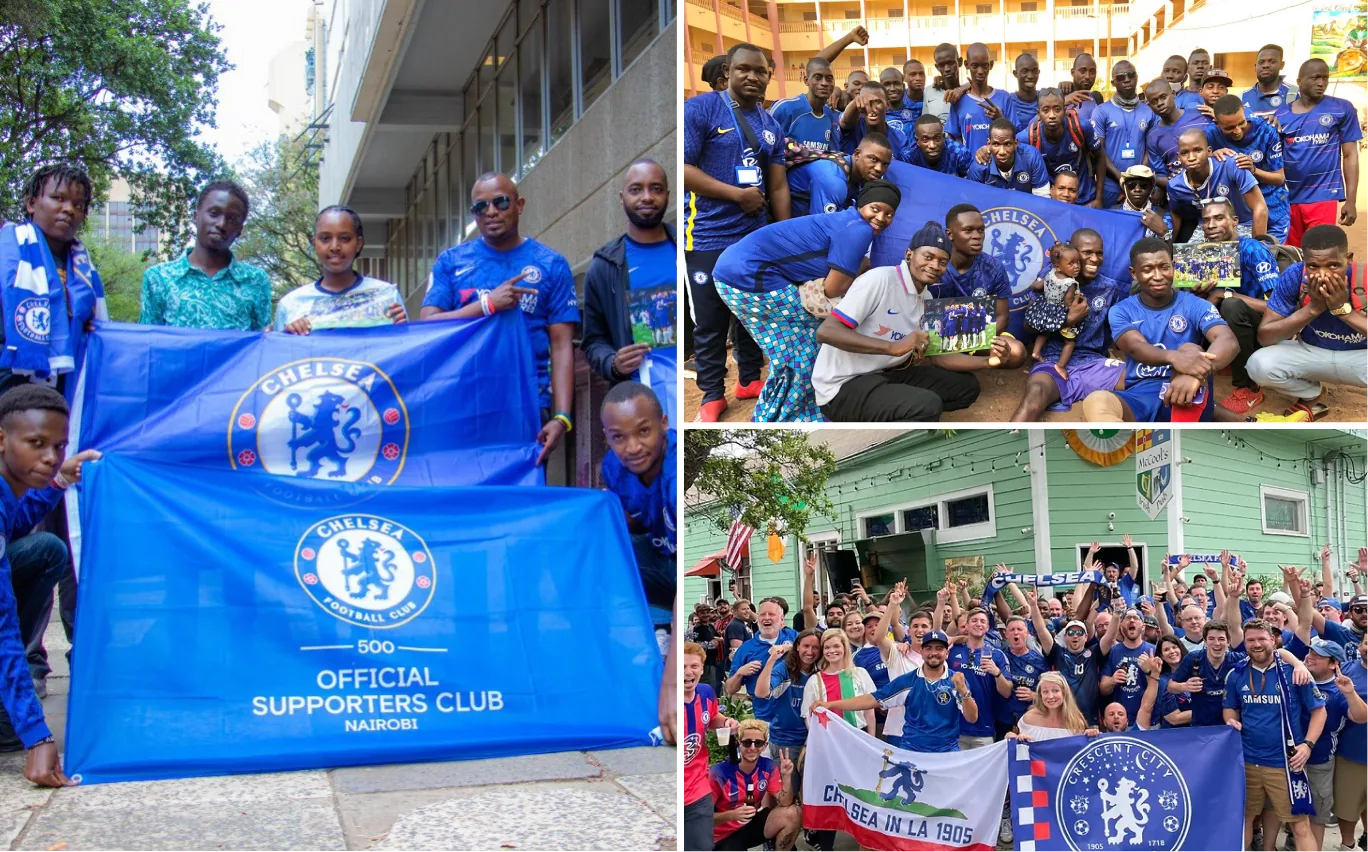
Official Chelsea FC supporters clubs in Nairobi, across Africa and in Los Angeles
A global supporter base — official fan clubs from Nairobi to Los Angeles

1905

Founded

110M+

Global digital reach

17

Stakeholder interviews

7

Competitors analysed

The challenge

Problem Statement

The project was centred around the hypothesis that international fans of Chelsea FC would be prepared to pay for exclusive content.

This hypothesis aimed to explore new revenue streams and enhance fan engagement by offering premium content tailored to a global audience. Validating it presented several challenges.

Geographic spread

The diverse geographical locations of fans required coordinating research across different time zones and cultures.

Varied expectations

Understanding and addressing the varied expectations and preferences of fans from different countries was complex.

Practical limits

Logistical issues such as language barriers and technological limitations in certain regions added further complexity.

How we worked

Approach

01

Put the audience at the heart of every conversation.

02

Conduct global audience engagement through an array of co-creation workshops.

03

Use quant and qual data sources to identify audiences and understand their behaviours and needs.

04

Blueprint Chelsea FC’s digital touchpoints.

05

Evidence everything through digital artefacts, maps, canvases and audits.

At a glance

What was involved?

17

Stakeholder interviews

2

Audience types defined

10

Key fan regions

7

Competitors analysed
Deep-dive and refinement sessionsAudience workshopsFan engagement interviewsFan experience workshopsCompetitor analysisNavigation information architecture

Discovery

Stakeholder Interviews

I contributed to 17 stakeholder interview sessions to gather functional requirements, focusing on uncovering internal biases and assumptions needing future validation through empathy mapping. My role involved writing discussion guides, moderating the sessions, and synthesising data.

I synthesised the output into a value proposition framework, ensuring the strategy aligned the product suite with market needs. I identified audience goals from multiple stakeholder perspectives — mapping benefits, expectations and needs, and understanding what would delight customers and increase the likelihood of adopting Chelsea FC's value proposition.

These discussions helped stakeholders develop empathy for the audience by exploring their negative experiences, emotions and risks. We mapped the functional, social and emotional tasks audiences aim to perform, the problems they try to solve, and the needs they wish to satisfy.

Teams engaged

Communications
Fan Engagement
Branding & Design (2 sessions)
Ticketing (2 sessions)
E-commerce
Chelsea TV
Social Media
Marketing (3 sessions)
Commercial Partnerships
Online Supporters Clubs
CRM
Voice of Customer
Content Analytics
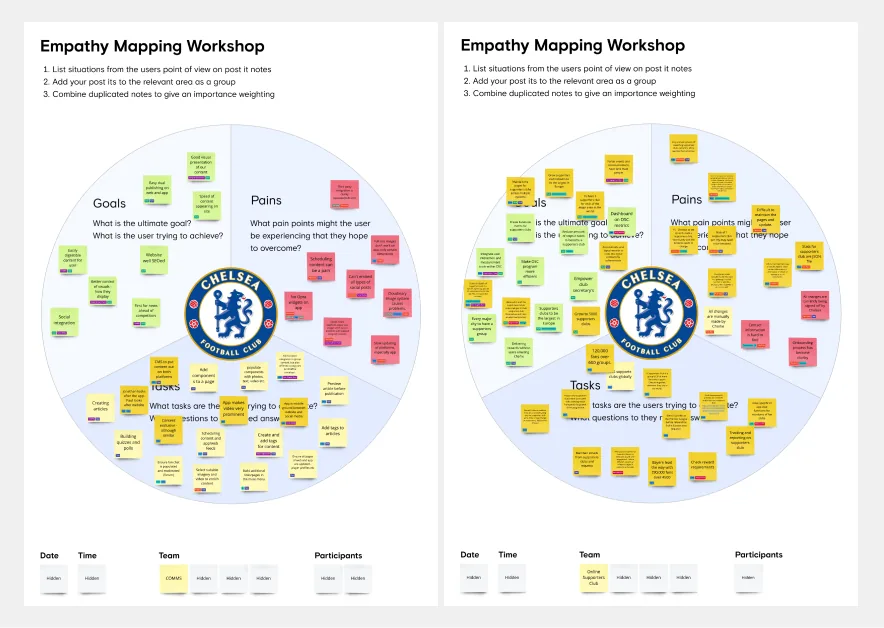
Two empathy maps centred on the Chelsea crest, mapping goals, pains and tasks for each audience type
Synthesis: empathy maps capturing audience goals, pains and tasks

Co-creation

Audience Workshops

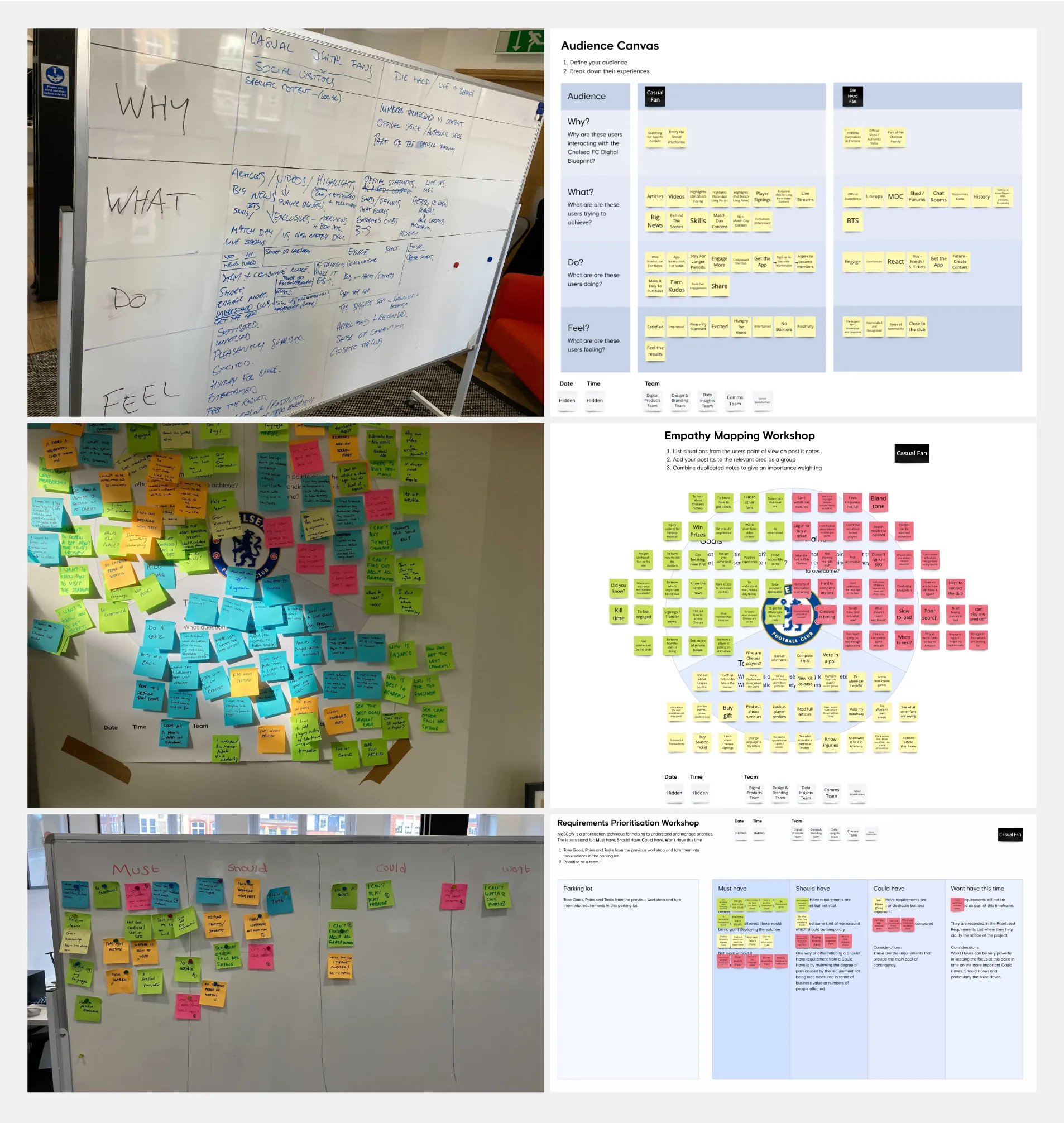
I contributed to the discovery phase by aligning internal assumptions regarding Chelsea FC's key audiences. I helped plan a cross-team Audience Mapping Exercise, where participants identified the key audiences of Chelsea FC's digital touchpoints on post-it notes — producing over 40 unique variations. Through a dot-voting exercise, the group refined the output to 10 key prospects using a constraint of 3 votes each, preventing the HIPPO effect and enabling all participants to contribute equally.

Following this, I synthesised an open but structured conversation that captured key stakeholder hypotheses about what they believed their audience felt, said and did. This was refined into 2 key audience types: Casual and Die Hard. Empathy maps highlighting goals, pains and jobs to be done were mapped for both audience types, then prioritised into a MoSCoW to map the requirements.

Audience mapping whiteboards, dot-voting, the audience canvas, empathy mapping and MoSCoW prioritisation artefacts
From audience mapping and dot-voting to empathy maps and MoSCoW prioritisation

40+

Unique audience variations from post-it mapping

10

Key prospects after a 3-vote dot-voting constraint

2

Audience types defined — Casual and Die Hard

The global fan

Fan Engagement Interviews

We conducted fan engagement interviews to understand the global landscape and the sentiment audiences have towards the club's digital touchpoints. This was the first time a representative from the club engaged directly with audiences about their digital experiences.

The workshops aimed to qualify internal assumptions and understand their impact on the global share of wallet. Fans were recruited from key growth areas: Africa (Nigeria, Ghana, South Africa, Zimbabwe), Europe (UK, Spain) and the USA (Texas, California, Florida). The output involved mapping internal hypotheses to real qualitative user data.

The advancement in technology has allowed us to be accessible and to communicate through supporters’ channels. The volume of interactions and the nature of discussions have improved significantly. Now, we are not just fans; we feel like part of the club, celebrating every success and discussing every match as if we were there at Stamford Bridge.

Participant 1 — Zimbabwe

The Fifth Stand app is incredibly user-friendly and allows me to watch matches, check player updates, and interact with other fans seamlessly. However, I’d love to see more post-match analysis and the ability to download and share videos directly from the app. It would enhance our experience and help us engage more deeply with the club, especially when sharing highlights with other fans on social media.

Participant 2 — Nigeria
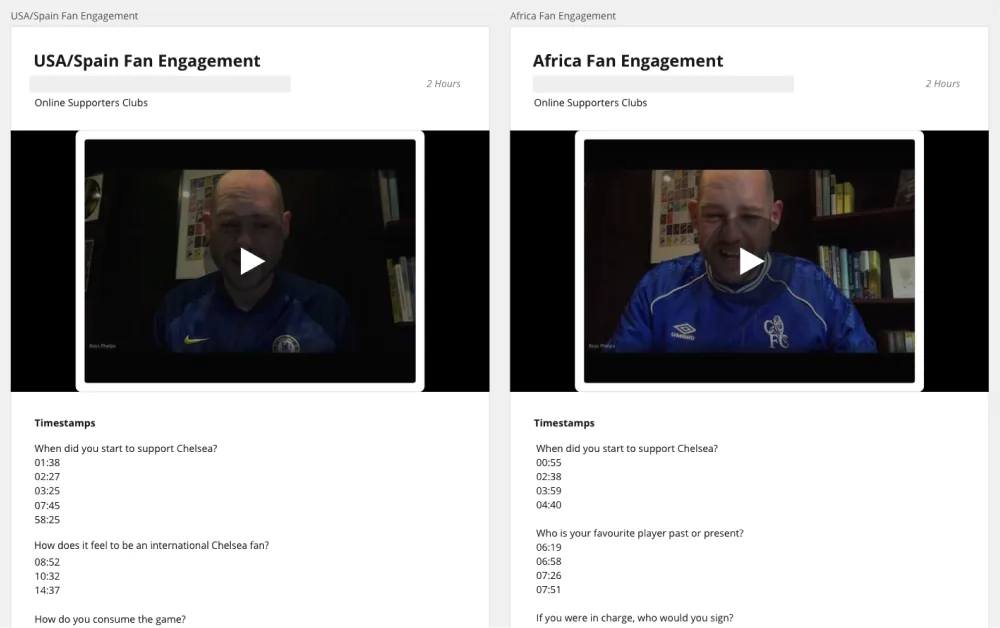
Recorded fan engagement interviews with supporters from the USA, Spain and Africa, with discussion timestamps
Recorded interviews with supporters across the USA, Spain and Africa

In their words

Fan Experience Workshops

The workshops aimed to gather insights on Chelsea FC's digital touchpoints from actual fans, identifying pain points, goals and tasks to align internal assumptions with user experiences. I contributed by planning and synthesising data from these workshops.

Inside a fan experience workshop

Pain points

  • Navigation issues, particularly with finding specific content like match highlights.
  • Frustrations with ticket purchase processes and the speed of the app.
  • A lack of personalised content for different fan segments.

Goals

  • Easy access to match information, video content and team news.
  • More exclusive behind-the-scenes content and interviews.
  • More detailed statistics and player information.

Tasks

  • Viewing highlights, checking match schedules and engaging with team news.
  • Purchasing tickets and accessing the online shop.
  • Keeping updated with live match scores and post-match analysis.

These insights, visualised in empathy maps, highlighted the fans' needs and expectations — providing a foundation for refining Chelsea FC's digital engagement strategy.
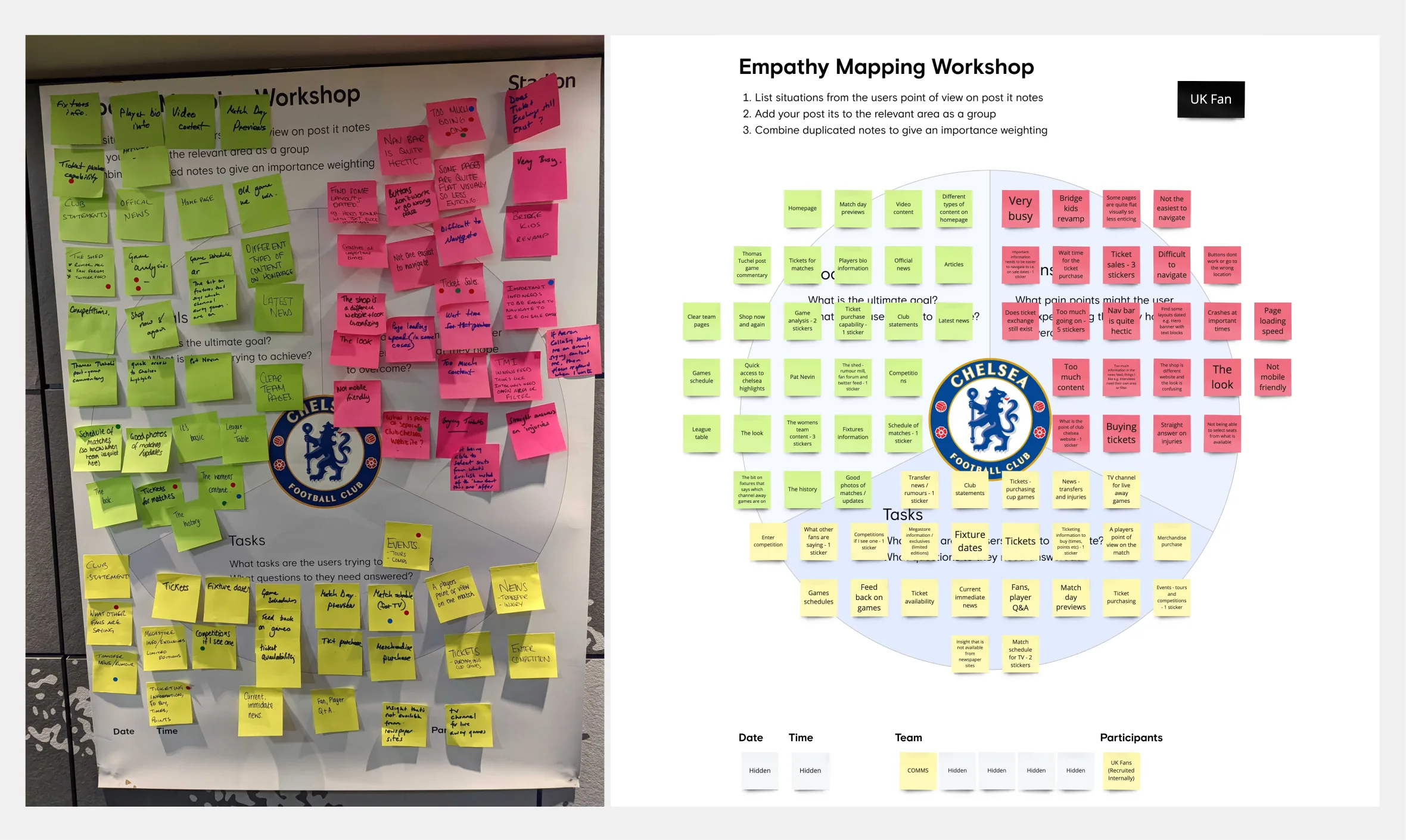
A physical post-it empathy board from a fan workshop alongside its digitised empathy map
Fan workshop insights visualised — from the post-it board to a digitised empathy map

Current state

Site Audit

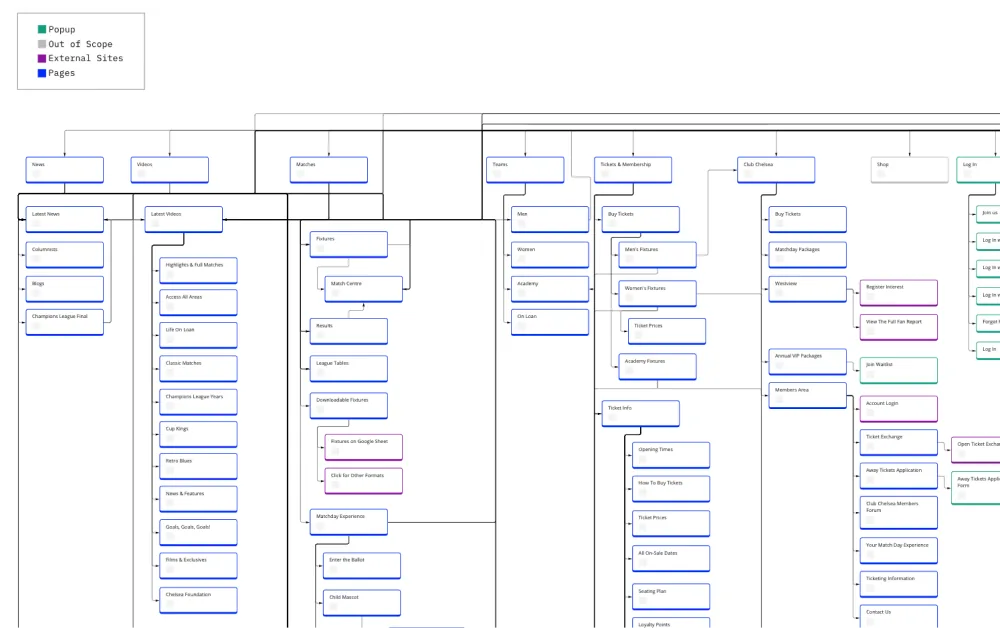
To gain a comprehensive understanding of the digital landscape, I created a service blueprint and carried out a content audit. This audit focused on the templates identified within the site and app maps.

Understanding the performance of the content Chelsea FC had previously published provided valuable insights, helping determine what was necessary for enhancing future content and improving the overall information architecture.

In the process, I identified 31 unique templates that were responsive to 3 device breakpoints, all derived from 16,000 live pages. To ensure clear communication of these findings, I produced detailed documentation — allowing for a thorough and effective audit.

Structured site map of Chelsea FC's digital estate used to scope the content audit
A structured site map scoping templates across the digital estate

31

Unique templates

3

Responsive breakpoints

16,000

Live pages

Benchmarking

Competitor Analysis

Video page snapshots

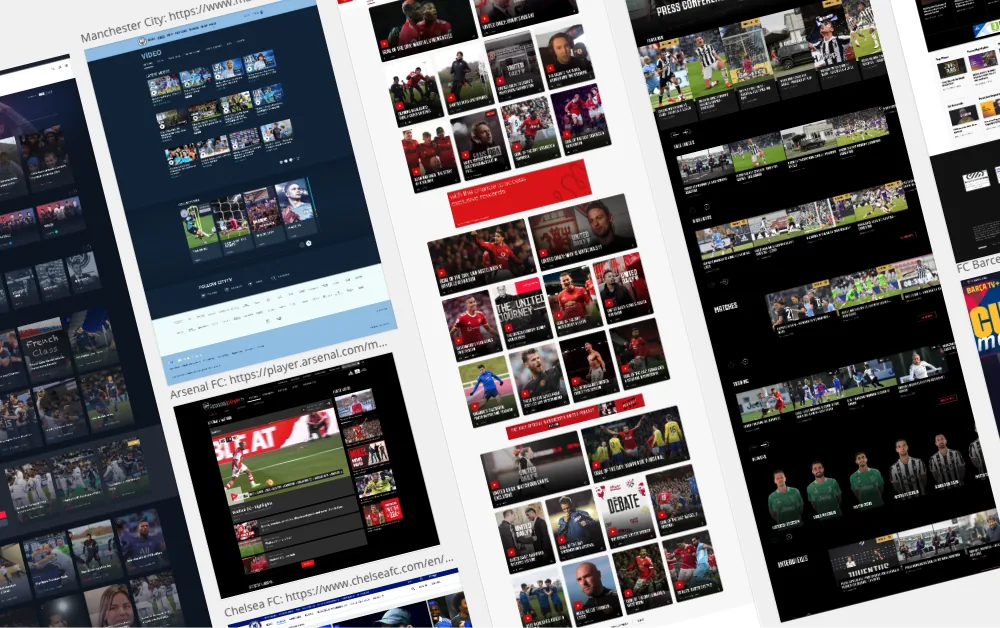
To gain insights into how Chelsea FC's video content compares with competitors, I identified and analysed snapshots of primary video pages from both direct and indirect competitors. These snapshots, taken at a specific point in time, provide a foundation for further research into video engagement across pre-match, match day and post-match scenarios. The initial analysis focused on the top-level video pages accessible via the main navigation.

Snapshots of primary video pages from Chelsea FC's direct and indirect competitors
Video page snapshots captured across direct and indirect competitors

Video page tagging

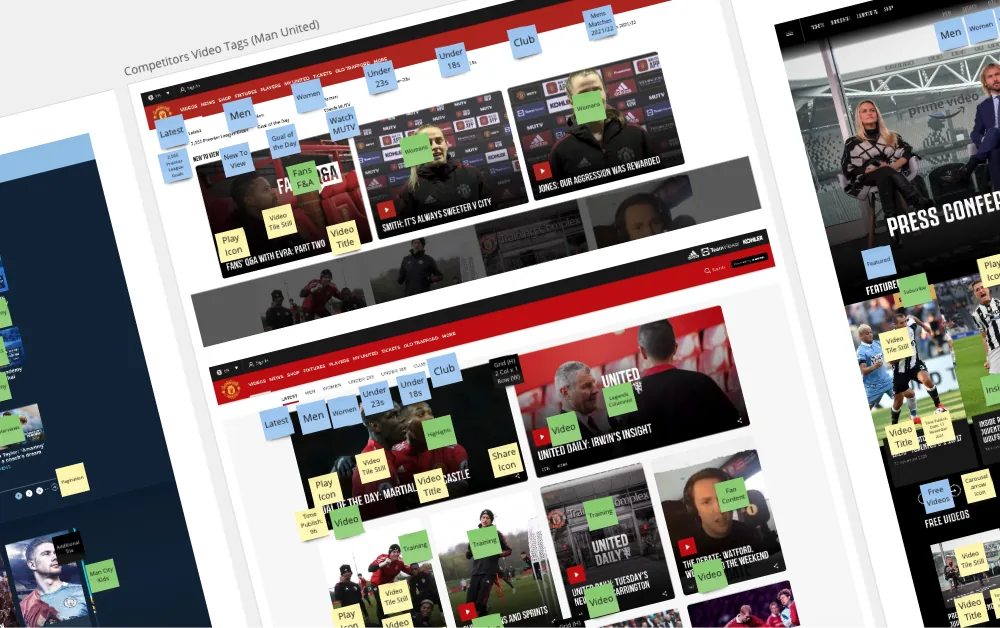
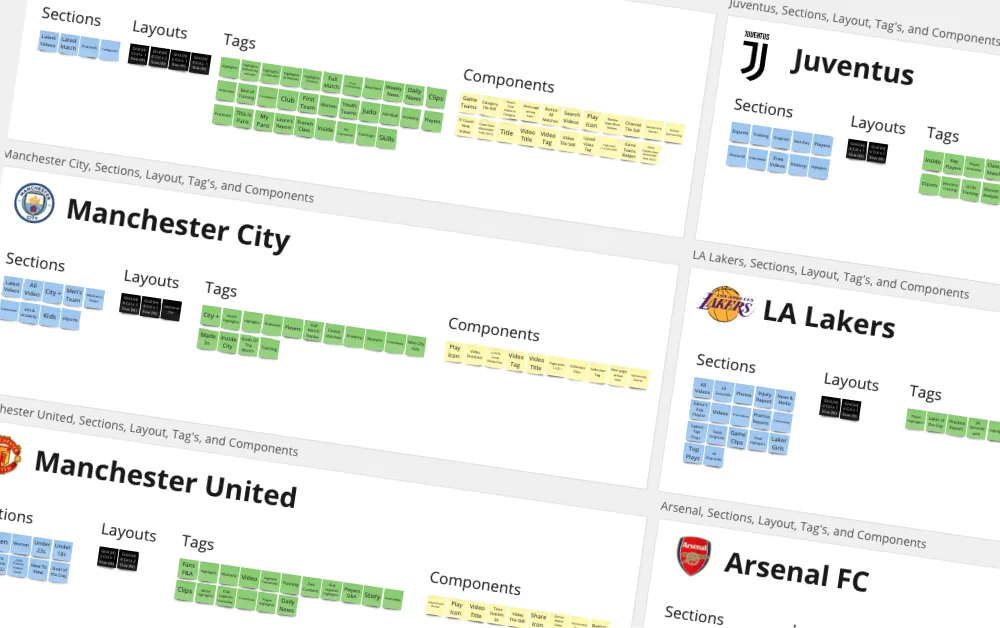
Effective content tagging allows users to search, filter and quickly identify the content they seek. A consistent tagging strategy enhances content organisation, enabling users to spend more time engaging with content rather than searching for it. For each competitor's snapshot, we used post-it notes for clarity.

GreenTagged content
YellowComponents within the page
BlackLayout
BlueSections
A competitor video page annotated with colour-coded post-it tags for content, components, layout and sections
Annotated competitor video page — colour-coded tagging legend

Information architecture structure

I compiled information on each of Chelsea FC's competitors' sections, layouts, tags and in-page components into a spreadsheet for further analysis. This data was then categorised into themes to identify common practices and unique strategies.

Competitor sections, layouts, tags and components compiled and categorised into themes
Competitor IA compiled and categorised into themes

Output

Findings Matrix

The findings were summarised into a matrix comparing Chelsea FC's video content structure with key industry competitors, highlighting how the club organises its video content relative to other football clubs.
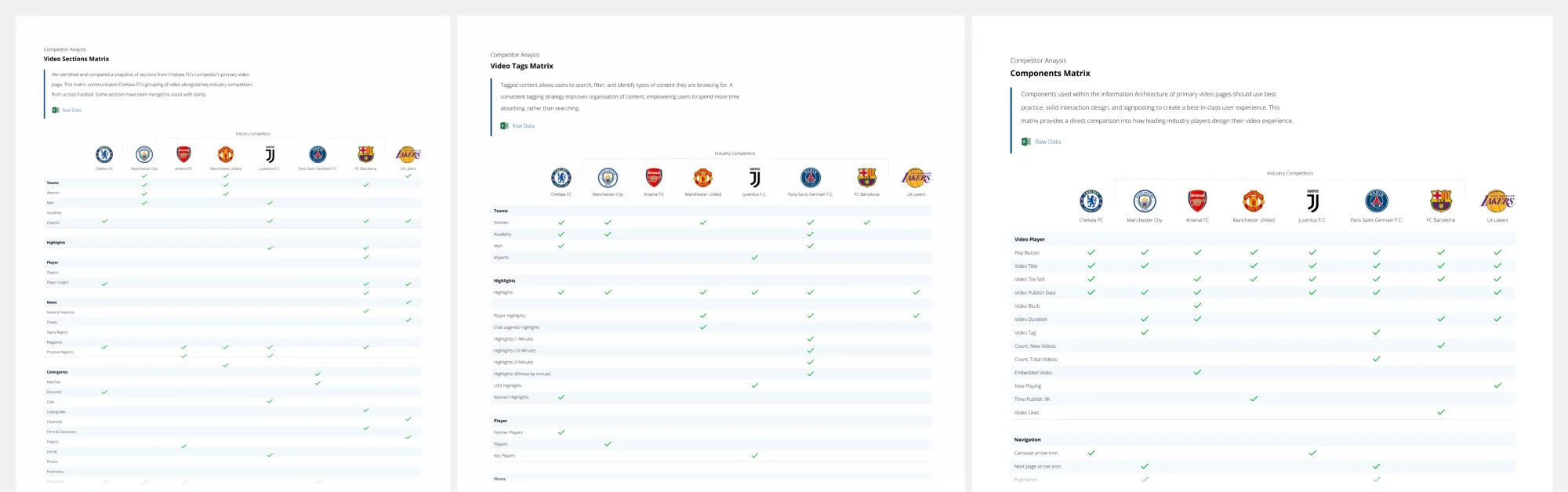
Findings matrices comparing Chelsea FC's video sections, tags and components against seven competitors
Findings matrix — video sections, tags and components vs. key competitors

Team sections

Unlike competitors, Chelsea FC lacks dedicated sections for individual teams. Key competitors elevate their Women’s Team to parity with the Men’s First Team.

Subscription services

4 of 7 competitors offer subscription services for exclusive content. FC Barcelona, for example, has an extensive service with live Barça TV. Chelsea FC live streams events free of charge but lacks a subscription service.

Content tagging

While Chelsea FC’s tagging is efficient, its highlights section is very general. Competitors like Manchester United and Paris Saint-Germain use more specific tags such as player, match and duration-based highlights.

Call to action

Chelsea FC uses a single call to action in their video section, featuring a “see all” option and a video carousel. Competitors often use multiple calls to action to enhance user engagement.

Lessons Learned

Direct fan insight made the strategy stronger.

One key lesson was the immense value of direct fan engagement, which provided insights that internal assumptions alone could not reveal. Effective content tagging and clear navigation proved crucial for enhancing user satisfaction, highlighting the importance of a user-centred approach. We also learned the significance of maintaining regular feedback loops with users — essential for the continuous improvement of the digital experience. This iterative process ensures the platform evolves in line with user needs and preferences, fostering a more engaging and satisfying experience for fans.