Case Studies/BP

Fleet management transformation for a lower-carbon future.
Stepping into the vast world of bp, you’ll uncover a story of transformation — redefining a rich oil production legacy not just as an oil producer, but as a forward-thinking energy provider with a keen eye on sustainability.
Timeframe
1 year
Location
Hybrid, London UK
Engagement
Client-side Contract
Role
Service Designer
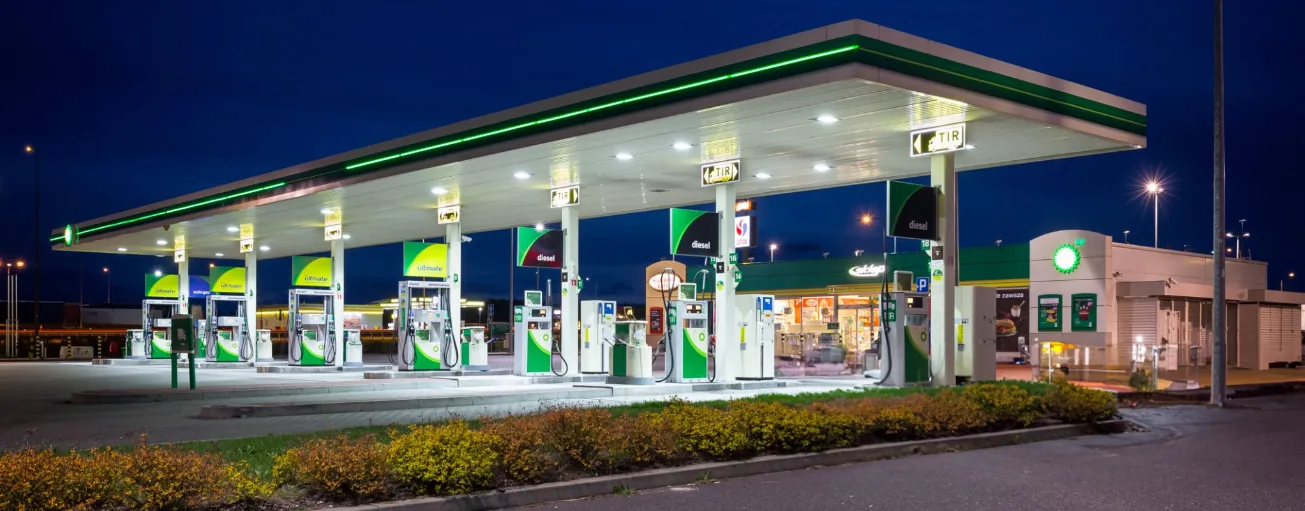
The ambition
The Vision
bp aimed to move beyond just being an oil company, wanting to be a holistic energy provider that’s kinder to our planet. They made big changes in the fleet industry — and bp’s goal was to bring all these ideas together and help Fleet Managers work smarter for a greener future.
bp fuel and charge card
A single card making it easier for customers to pay for both fuel and electricity.
BPme app
Letting drivers pay for fuel without ever leaving their car.
Target Neutral
A programme to help reduce the carbon footprint of vehicles.
What success looked like
The Goals
Diversify beyond fleet energy.
Double the fleet business by 2030.
Increase resilience of Fleet cashflows.
Optimise and grow the fleet customer base.
Lead customers to low carbon energy solutions.
Accelerate the customer transition to low carbon energy.
The flagship initiative
The ‘Superfleet’ Programme
The ‘Superfleet’ Programme was our key project to bring the vision to life, evolving through several versions before we got it just right. As a strategic UX designer, I believe it’s key to note that ‘Superfleet’ was all about putting people first. This focus meant that our customers didn’t just get a great experience, but one that truly met their needs.
How we worked
Approach
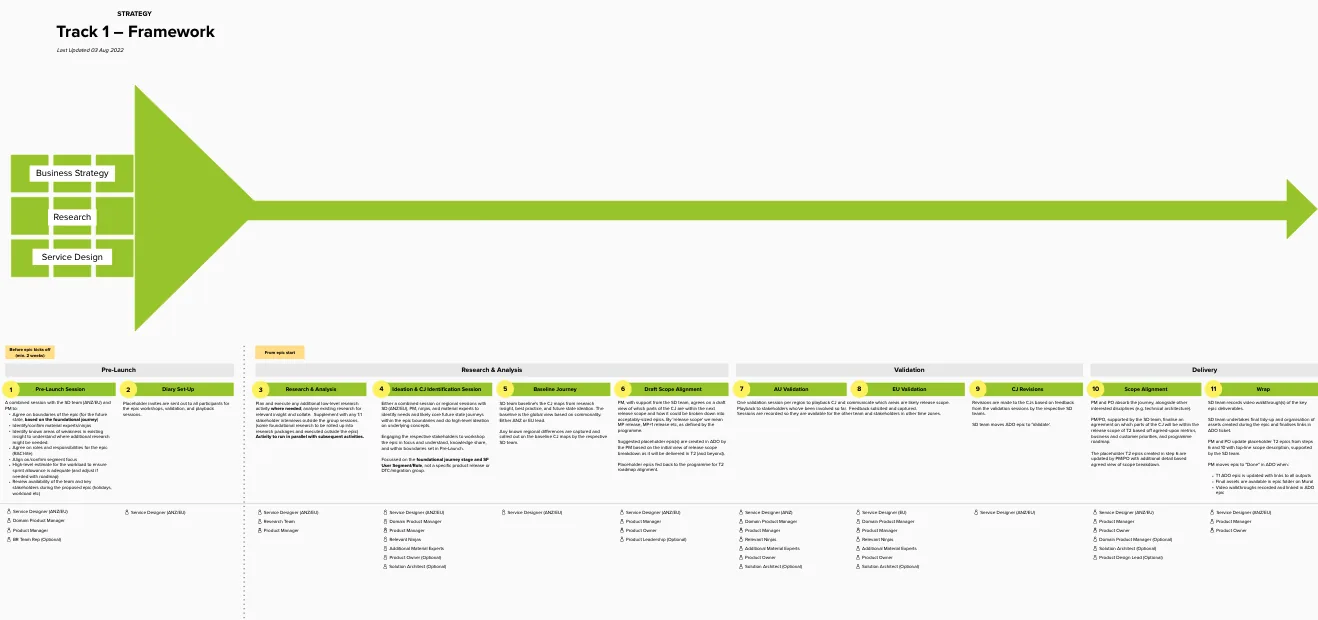
Our programme was among the first to use the Tri-track agile methodology. Think of it as a better way to deliver the right thing, where the discovery and the delivery are kept separate, giving us lots of benefits. It meant the strategy was visible, and things moved quickly.
This method also helped us work better together, spot good opportunities faster, keep our focus, and drive collaboration — which helped make big decisions easier. We aimed to get real results, improving how customers felt and adding value at every turn.
My contribution
My Role
As a strategic UX designer, I was lucky to work alongside a talented team filled with top-notch designers and amazing consultants from around the world. Within just a year, I saw my design skills grow rapidly. I played a key role in the adoption of the first track of the Tri-Track agile methodology.
I worked on 11 different domains, ensuring that we captured every step of the customer’s journey and integrated it seamlessly with our business processes. My tasks included customer interviews, primary and secondary research, moderating workshops, and creating artefacts for our product squads. At bp my confidence and presentation skills grew, and I presented bi-weekly updates to the programme.
Discovery
Research: Laying a Foundation of Discovery
We quickly realised that to truly focus on our customers, we needed their direct input — which is often harder than you’d think in large organisations. To make this happen, our team defined a framework for how we’d carry out our customer research, aiming to set a standard, keeping customers front and centre.
It helped us continuously check and validate our ideas, and ensured accountability by doing research sprints. This regular check-in meant we were always in touch with our customers, helping us learn faster. I worked closely with the core research team, especially in planning and synthesis of findings, which helped shape our foundational customer journey.

Service design
Mapping
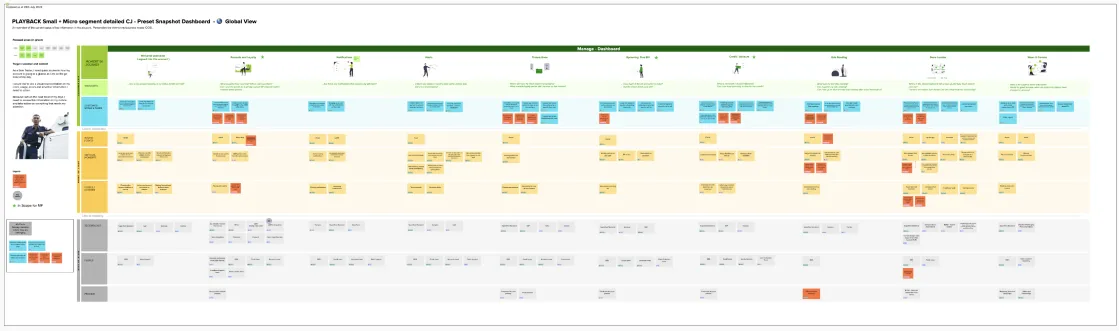
I co-created 11 unique customer journeys, across 11 domains — each one capturing how Fleet Managers move through bp’s products and processes.
11 domains mapped
These journeys identified
Together these maps formed part of a service blueprint for the end-to-end journey.
Notifications
Frameworks
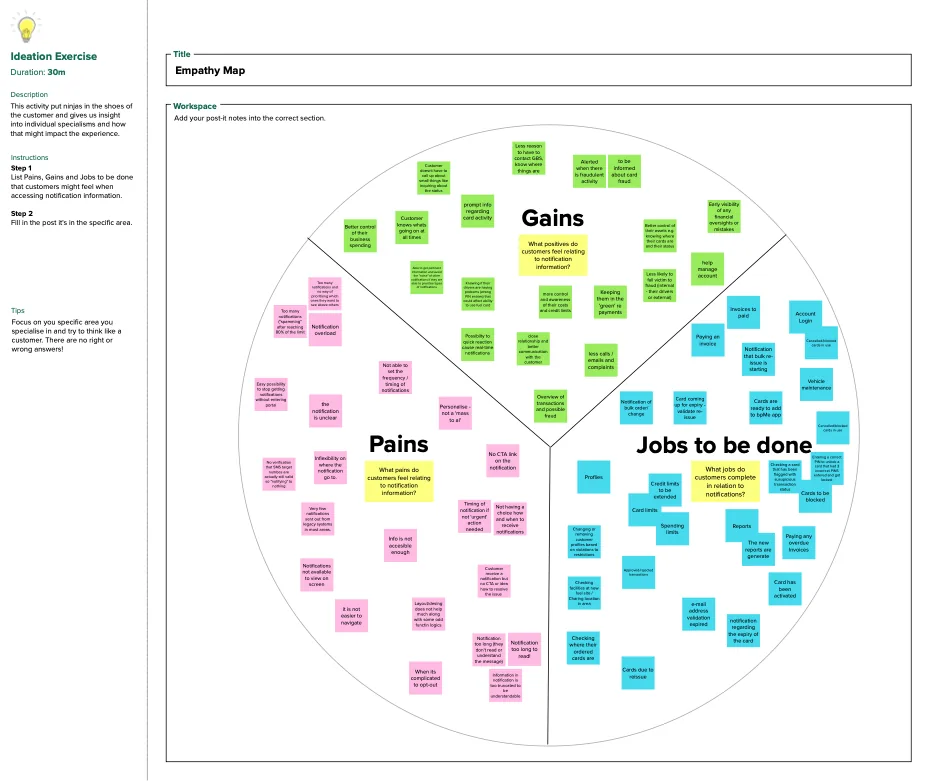
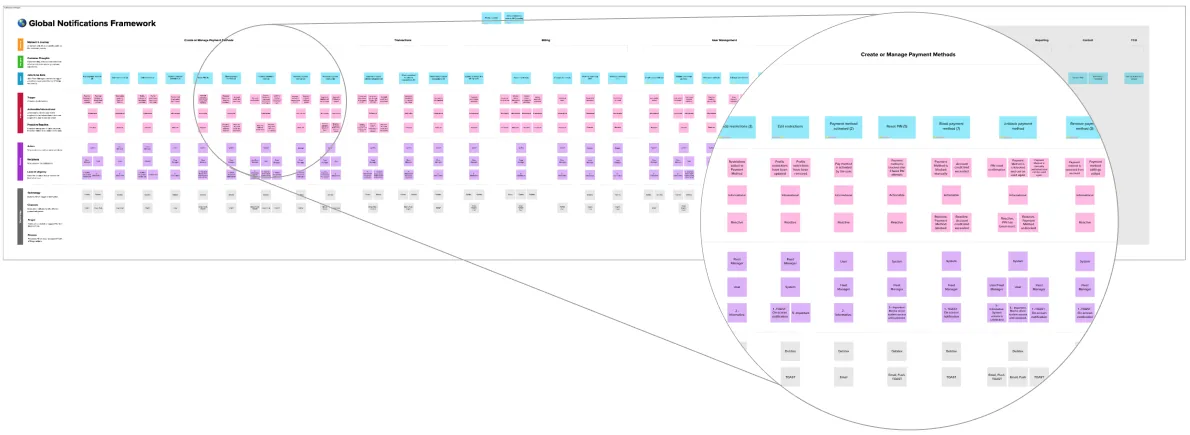
Working on notifications was a true highlight for me. I played a pivotal role in shaping a framework that pinpointed key moments in the customer journey, known as “moments of truth”. These moments provided insight into what drives our efforts to enhance the customer experience.
We also identified “jobs to be done” — specific tasks that Fleet Managers undertake which activate a notification. I’d categorise each trigger by its nature: whether it’s actionable or just informational, proactive or reactive, its intended recipient, and its level of urgency. This approach was rolled out across five major areas. Plus, it was awesome to see nudge theory come to life through this process.
Outcomes
bp was an incredible experience where I learned a lot, met some of the most talented individuals, and delivered amazing value.
I think it’s important to highlight how Agile can often make or break a product, depending on how it is implemented in large organisations who run large transformational programmes. Discovery went as intended, at a great pace and in great fidelity. The organisation went through multiple delivery cycles with some challenges — and the discovery has since been used for a future delivery.